
What Grid Pattern Should I Get for My Welding Table? (Complete Guide)
Updated: Apr 22
Why Grid Pattern Matters in a Welding Table?
A welding table is more than just a flat surface — it’s a modular fixturing system.
The grid of holes allows you to:
Position workpieces precisely
Clamp from multiple angles
Build repeatable setups
Eliminate custom jigs
👉 The grid pattern you choose directly affects your flexibility, speed, and efficiency.
Choosing the right grid pattern is just one part of building an efficient workspace. The overall design, surface quality, and modular system also play a huge role. If you want a deeper understanding of how everything works together, explore our guide on 3D welding tables and how they improve accuracy, reduce setup time, and increase productivity in modern fabrication.
Step 1: Choose Between D16 and D28
The first and most important decision is the system size.
🔹 D16 Welding Table (System 16)
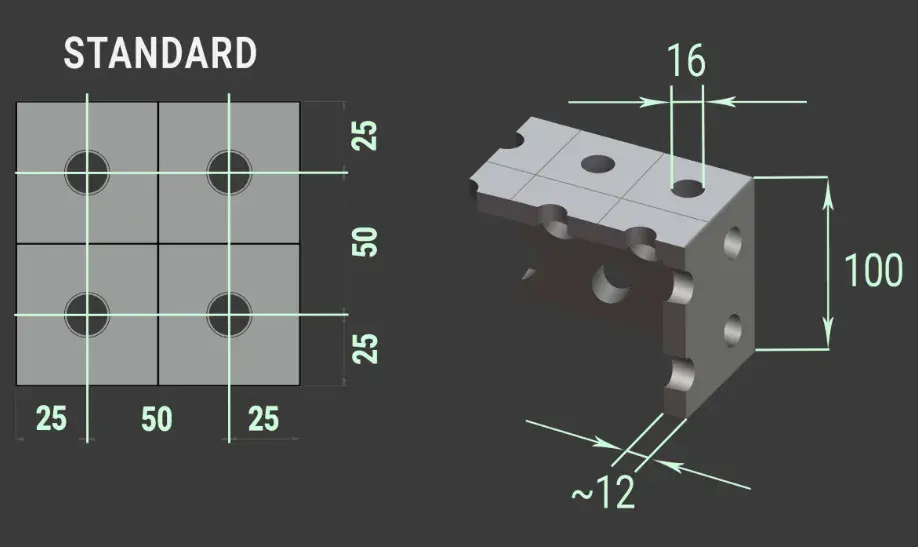
Hole diameter: 16 mm
Hole spacing: 50 × 50 mm
Best for:
Small parts
Sheet metal
Precision work
Light fabrication
Advantages:
More holes = more flexibility
Lower cost
Lightweight system
In addition to choosing between D16 and D28, it’s important to match your table size with your typical workpieces. A table that is too small will limit your workflow, while one that is too large may waste space and budget. Take a look at our guide on choosing the right welding table size to find the perfect balance for your workshop.
🔹 D28 Welding Table (System 28)
Hole diameter: 28 mm
Hole spacing: 100 × 100 mm
Best for:
Heavy steel structures
Large frames
Industrial fabrication
Advantages:
Stronger clamping force
Higher durability
More robust accessories

D16 vs D28: Quick Comparison
Feature | D16 | D28 |
Hole Size | 16 mm | 28 mm |
Hole Spacing | 50 mm | 100 mm |
Flexibility | ⭐⭐⭐⭐⭐ | ⭐⭐⭐ |
Strength | ⭐⭐⭐ | ⭐⭐⭐⭐⭐ |
Best Use | Precision work | Heavy-duty fabrication |
👉 Simple rule:
Choose D16 → flexibility & precision
Choose D28 → strength & heavy-duty work
Step 2: Standard vs Diagonal Grid (For D28)
If you choose D28, you’ll also need to decide the grid layout:
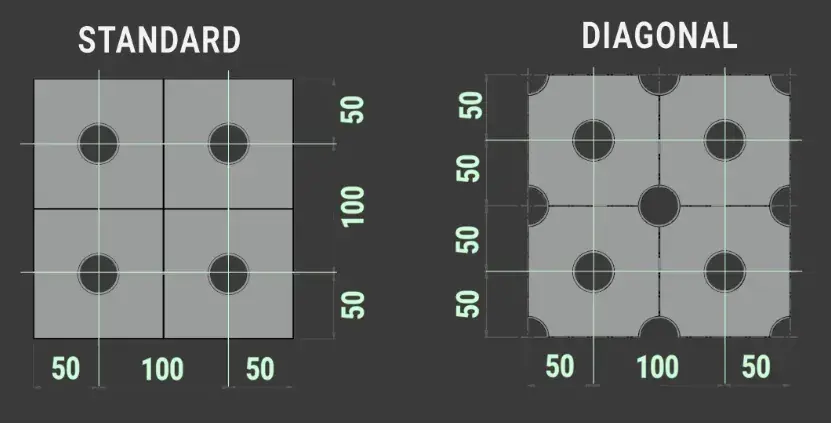
🔹 Standard Grid
100 mm spacing
Simple square layout
Best for:
General welding
Standard fabrication work
Lower budget
🔹 Diagonal Grid
Additional holes at 50 mm centers
Allows 45° positioning
Best for:
Complex setups
Faster positioning
High flexibility
Why Diagonal Grid is a Smart Upgrade
Diagonal grids effectively:
Double your positioning options
Reduce setup time
Improve accuracy
👉 For many workshops, this means higher productivity and faster turnaround
No matter which grid layout you choose, surface durability should not be overlooked. Welding tables are constantly exposed to heat, spatter, and heavy loads. Understanding the difference between treated and untreated surfaces can make a big difference in long-term performance. Learn more about nitrided vs standard welding tables to choose the best option for your application.
Accessories Matter More Than You Think
No matter which grid pattern you choose, your setup depends on accessories:
Clamps – secure your parts
Stops & Angles – ensure repeatability
Pins – fast alignment
Blocks & Fixtures – build complex setups
💡 Pro Tip: A complete fixture kit will unlock the full potential of your welding table.
So… Which Grid Pattern Should You Choose?
Here’s the simplest decision guide:
👉 Choose D16 if:
You work with small or precise parts
You want maximum flexibility
You’re budget-conscious
👉 Choose D28 Standard if:
You do general fabrication
You want strong clamping
You need a cost-effective industrial solution
👉 Choose D28 Diagonal if:
You handle complex or custom jobs
You want faster setups
You want maximum efficiency and versatility
Final Recommendation
If you're unsure:
👉 Most professionals choose D28 Diagonal
Why?
Strong
Flexible
Future-proof
It’s the best balance between power and versatility

FAQ
What is the best grid pattern for a welding table?
It depends on your work. D16 is best for precision, while D28 diagonal offers the highest flexibility for industrial use.
Is D28 better than D16?
For heavy-duty work, yes. For precision and small parts, D16 is better.
Is diagonal grid worth it?
Yes. It increases flexibility and reduces setup time, especially for complex projects.
Looking for the right welding table?
📧 Email: sales@precisionweldingtable.com
🌐 Website: https://www.precisionweldingtable.com/
📱 WhatsApp: +86 18028742690
We offer D16 & D28 welding tables with full fixture solutions and worldwide shipping.


Comments