
What Is a Modular Welding Table and Why Fabricators Prefer It
- Sep 1, 2025
- 3 min read
Updated: Mar 10
What Is a Modular Welding Table?
A modular welding table is a precision workbench designed for welding, fabrication, and metal assembly. Unlike traditional flat welding tables, a modular welding table uses a grid of precision holes that allow fabricators to position clamps, stops, and fixtures anywhere on the surface.
This modular design makes it easy to create accurate setups for different projects without building custom jigs every time.
Most modular welding tables use standardized hole systems such as:
System 16 (16mm holes)
System 28 (28mm holes)
These hole systems allow fabricators to use a wide range of clamps, locating pins, squares, and fixtures to hold parts precisely in place.
Because of this flexibility, modular welding tables have become the standard in modern fabrication shops.
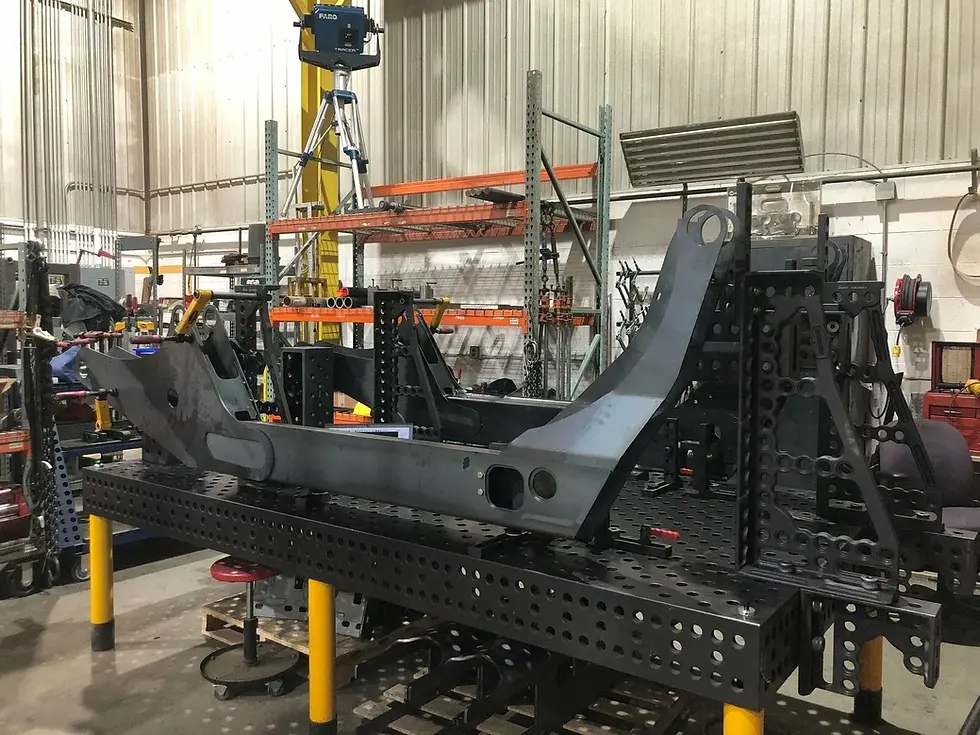
How a Modular Welding Table Works
A modular welding table works by combining three main elements:
1. Precision Hole Grid
The table surface contains evenly spaced holes arranged in a grid pattern.
Most professional welding tables use a 100mm x 100mm grid spacing, which allows consistent positioning of fixtures and clamps.
These holes allow fabricators to insert:
clamps
stops
support blocks
This grid system enables extremely accurate part positioning.

2. Clamping and Fixturing System
A modular welding table becomes powerful when combined with welding table fixtures and clamps.
Common accessories include:
toggle clamps
screw clamps
angle brackets
locating pins
stops
support blocks
These accessories allow fabricators to lock workpieces in position during welding.
Because everything is modular, setups can be changed quickly for different projects.
3. Flat and Rigid Table Surface
High-quality modular welding tables are manufactured from precision-machined steel plates.
Typical specifications include:
25mm or thicker table plates
flatness tolerance around 0.3mm per 1000mm
precision hole alignment
high load capacity
This ensures the table remains stable and accurate during welding operations.

Advantages of Modular Welding Tables
1. High Precision Welding
A modular welding table allows parts to be held perfectly square and aligned during welding.
This improves:
weld quality
dimensional accuracy
repeatability
For fabrication shops producing frames, structures, or assemblies, precision is critical.
2. Faster Setup Times
Traditional welding setups often require fabricators to build custom jigs.
With a modular welding table, setups can be built within minutes using standard fixtures.
This dramatically improves production efficiency.
3. Flexible Workholding
Because the table surface contains a grid of holes, clamps can be placed anywhere on the table.
This allows fabricators to work on many types of parts:
steel frames
brackets
structural components
machine bases
custom metal fabrication
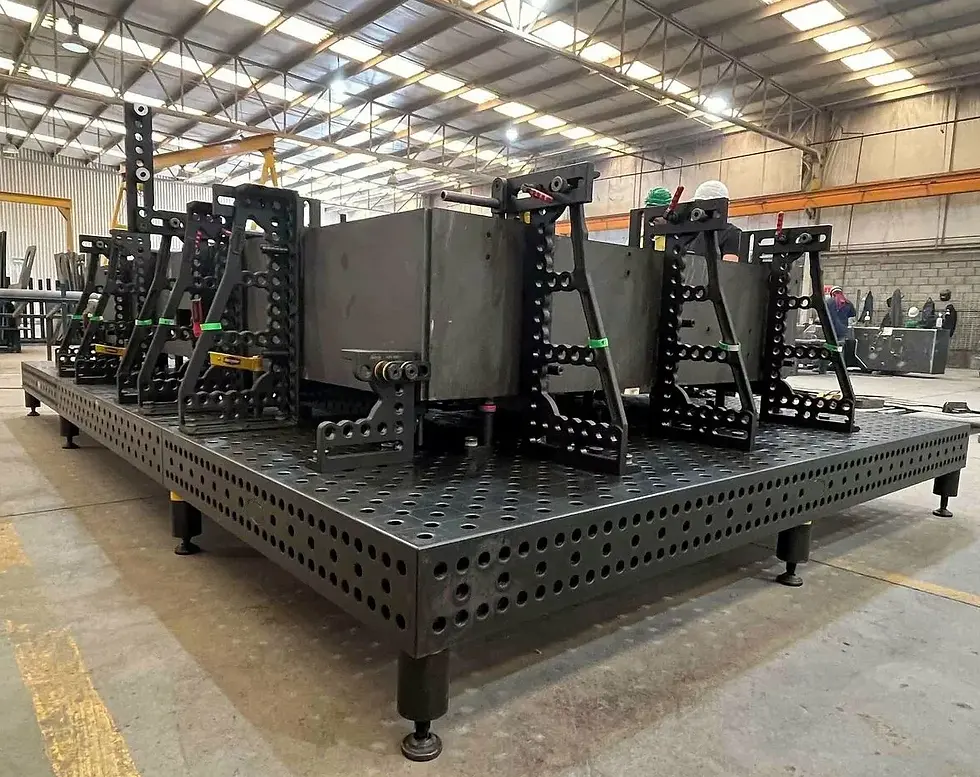
System 16 vs System 28 Modular Welding Tables
Two common modular welding table systems are used in fabrication shops.
System 16 Welding Tables
Features:
16mm holes
lighter fixtures
ideal for small to medium workpieces
Commonly used for:
light fabrication
motorcycle frames
small assemblies
System 28 Welding Tables
Features:
28mm holes
heavier-duty fixtures
stronger clamping force
Commonly used for:
heavy steel structures
industrial fabrication
large frames
Many professional fabrication shops prefer System 28 modular welding tables because they provide higher rigidity and stronger fixturing capability.

Industries That Use Modular Welding Tables
Modular welding tables are widely used in many industries, including:
metal fabrication shops
automotive manufacturing
machinery manufacturing
steel structure fabrication
robotic welding cells
In robotic welding environments, modular tables allow engineers to design repeatable fixturing setups for automated production.
Choosing the Right Modular Welding Table
When selecting a modular welding table, several factors should be considered:
Common sizes include:
1200 × 800 mm
1500 × 1000 mm
2000 × 1000 mm
2400 × 1200 mm
The right size depends on the type of fabrication work performed.
Table Thickness
Typical plate thickness:
25mm
Thicker plates provide greater rigidity for heavy welding work.
Surface Treatment
High-end modular welding tables often feature nitrided surfaces to improve durability and reduce weld spatter adhesion.

Why Modular Welding Tables Are Essential for Modern Fabrication
Modern fabrication requires precision, flexibility, and efficiency.
A modular welding table allows fabricators to:
reduce setup time
improve welding accuracy
create repeatable fixtures
adapt quickly to different projects
For these reasons, modular welding tables have become one of the most important tools in modern welding workshops.
Need a Precision Welding Table for Your Fabrication Shop?
If you are looking for a high-precision 3D welding table or modular welding fixture system, feel free to contact us.
Scan the QR code below to contact us instantly.
⭐ Contact us for pricing, catalog, technical drawings, and engineering support.


Comments